Colonial, Federal, or Folk: A Quick Guide to Early American Antiques for New Collectors
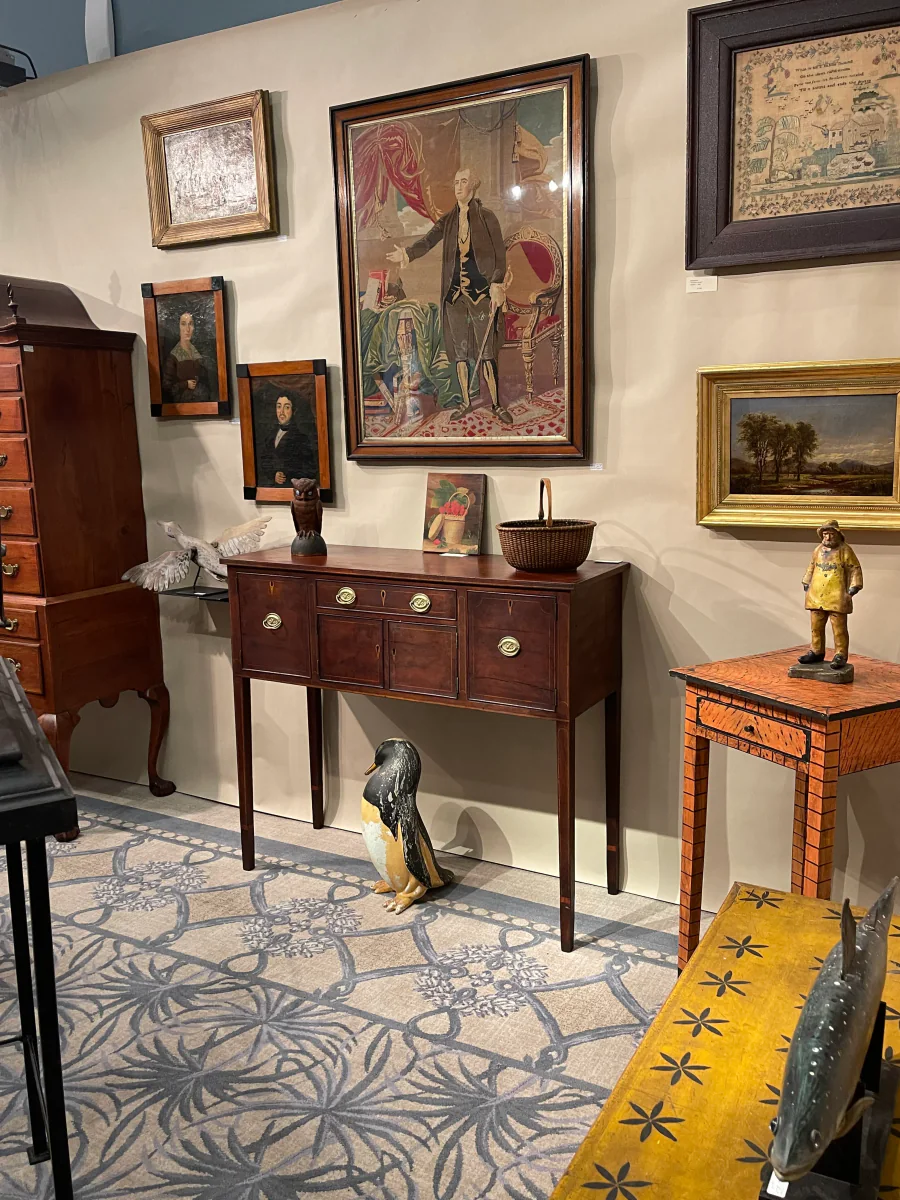
If you are beginning to collect early American antiques, the words Colonial, Federal, and folk art can feel difficult to separate. They describe different things, but they often overlap.
Colonial and Federal generally refer to periods and design traditions. Folk art describes the way an object was made, and often the setting in which it was used. A painted chest may be Colonial in date and folk in character. A finely inlaid sideboard may be Federal in style. A carved eagle may belong to the broader tradition of American folk art.
The most useful place to begin is not with a label. It is with the object itself.
Look at its form, materials, construction, surface, and history. Then ask how those details work together.
The Three Categories at a Glance
Colonial
American Colonial antiques generally date from the 17th century through the 18th century. They were made during a period when furniture and household objects were often produced for practical use, with regional differences shaped by local materials, communities, and traditions.
Colonial furniture tends to feel solid and direct. Common examples include:
- Chests and blanket chests
- Tables and chairs
- Dressers and cupboards
- Boxes and storage pieces
- Stoneware and other household wares
Many Colonial objects have straightforward proportions and restrained decoration. Some feature turned legs, carved details, paneled construction, or painted ornament. Regional forms, including Pennsylvania German furniture, can be especially distinctive.
The important point is that Colonial does not mean plain or unsophisticated. A well-made Colonial object can have strong proportions, confident craftsmanship, and a compelling surface.
Federal
Federal style emerged after the American Revolution and is generally associated with the late 18th and early 19th centuries, roughly 1780 to 1820.
Federal design reflects renewed interest in classical architecture and the ideals of the new republic. Furniture is often lighter in appearance than earlier Colonial forms, with an emphasis on symmetry, proportion, and refined ornament.
Look for:
- Slender, tapered legs
- Symmetrical designs
- Fine inlays and contrasting veneers
- Reeding and fluting
- Urns, bellflowers, festoons, and other classical motifs
- Mahogany, satinwood, maple, and other carefully selected woods
A Federal piece may appear elegant without being overly decorative. Its quality is often visible in the balance of its lines and the precision of its inlay.
When looking at a sideboard, desk, or chest, pay attention to the relationship between the parts. Federal makers often created a sense of order from the placement of drawers, legs, veneers, and decorative details.
Folk Art
Folk art is not limited to one period or one material. It includes objects made outside formal academic traditions, often by local artisans or self-taught makers.
The category can include:
- Portraits
- Painted furniture
- Trade signs
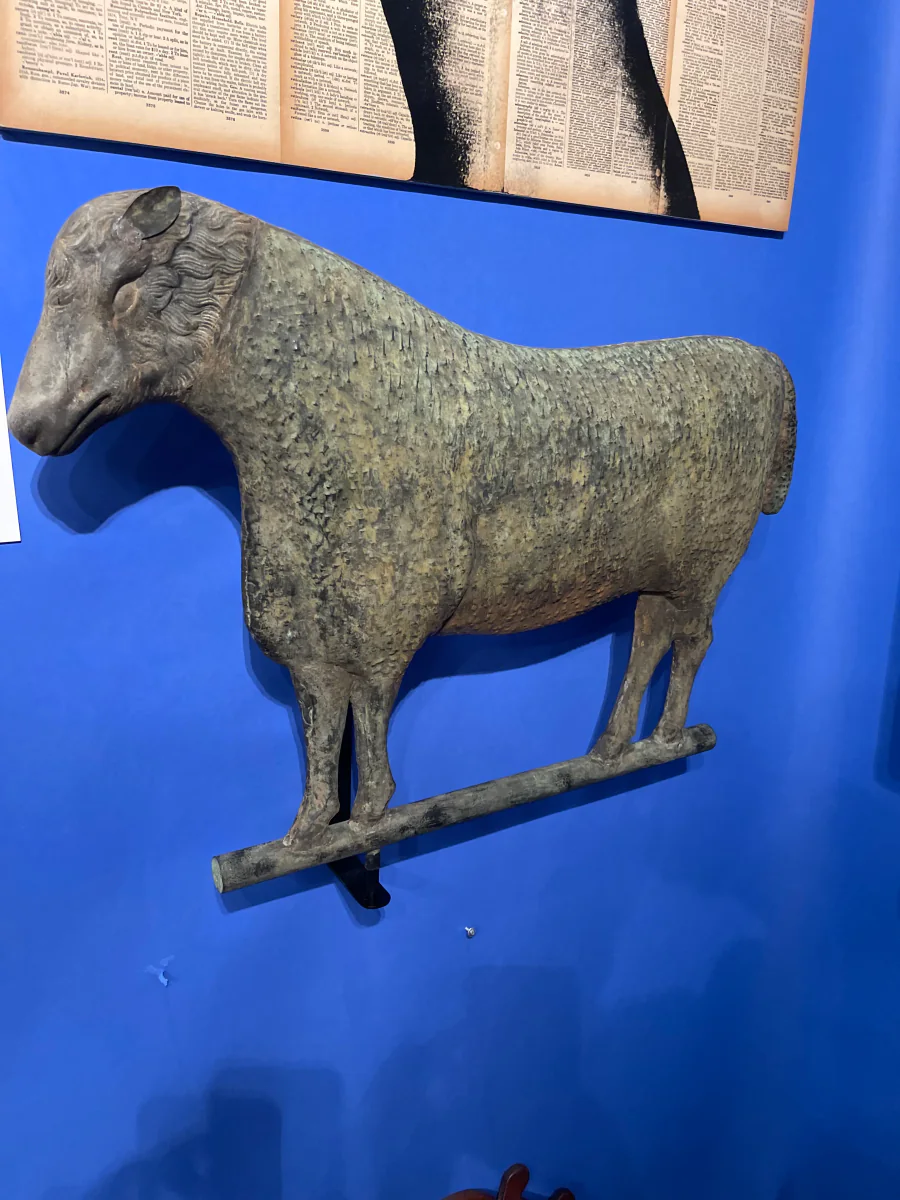
- Weathervanes
- Carved figures
- Decoys
- Toys
- Textiles
- Stoneware
- Sculptures and patriotic objects
Folk art often has a personal or regional quality. Its forms may be stylized rather than strictly realistic. Its appeal may come from the strength of the image, the character of the carving, the originality of the paint, or the story attached to the object.
A folk-art piece does not need to be perfectly made. In fact, individuality is often part of its value. What matters is whether the work has conviction, age, integrity, and a convincing relationship between its materials and its purpose.
How the Styles Overlap
The three categories are not separate boxes.
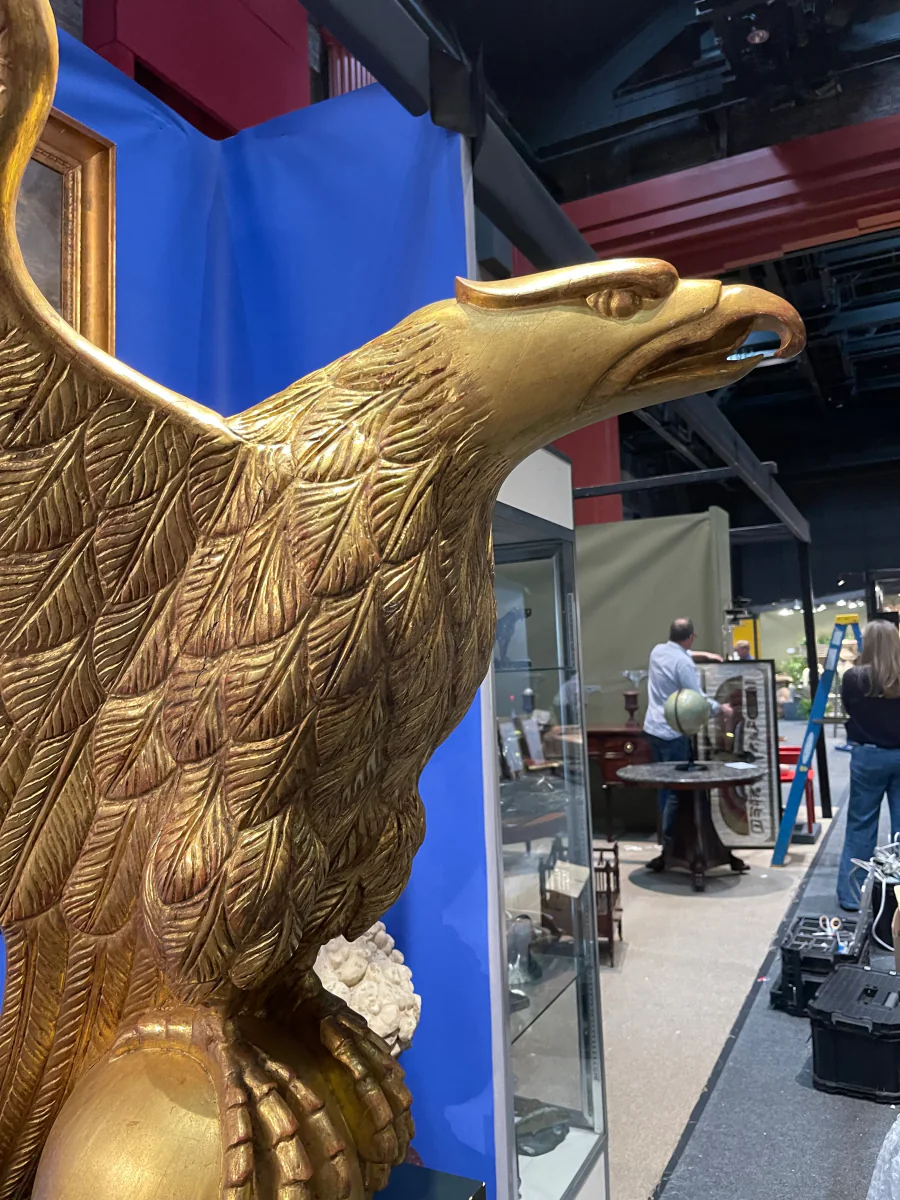
A Pennsylvania painted blanket chest may be Colonial in date and folk art in character. A finely made Federal chest can have a surface or regional history that gives it a strong place within an Americana collection. A carved eagle may have been made as a patriotic symbol, a decorative object, or a commercial form, while still reflecting folk-art traditions.
This overlap is part of what makes early American antiques rewarding to study. Labels help organize your thinking, but they should not replace close looking.
What to Examine First
When you are considering a piece, begin with five areas.
1. Form and Proportion
Stand back before examining the details.
Does the object feel heavy and practical, or light and carefully balanced? Are the proportions consistent with the period being suggested? Do the legs, drawers, panels, or architectural elements belong together?
Colonial furniture often has a sturdy, functional presence. Federal furniture tends to emphasize symmetry and visual lightness. Folk art may be more individual, with unusual proportions or simplified forms.
These are useful starting points, not final conclusions.
2. Construction
Look at the back, underside, drawers, joints, and hardware when they are accessible.
Handmade furniture may show subtle variations in saw marks, tool marks, joinery, and wood selection. Older objects can also contain more than one species of wood, reflecting repairs, regional availability, or the maker’s choices.
Modern staples, machine-made components, fiberboard, and Phillips-head screws can indicate later construction. They do not explain every object, but they deserve attention.
Do not inspect only the front. The less visible areas often tell you more about how a piece was made.
3. Surface and Patina
Original paint and finish are central to the appeal of many early American antiques.
Look for wear in places where handling would naturally occur: drawer edges, handles, chair arms, feet, and exposed corners. On painted furniture and folk art, study the layers of color, areas of loss, and the way the surface has aged over time.
A worn surface is not automatically a problem. In many cases, it is part of the object’s history. Heavy stripping, repainting, or aggressive refinishing can remove important evidence of age and use.
The goal is not to find an untouched object at any cost. It is to understand what is original, what has changed, and whether the changes have been honestly described.
4. Materials and Decoration
Materials can help place an object within a period or region.
For Colonial furniture, look closely at native woods, painted decoration, turned elements, and practical construction. For Federal furniture, study veneers, inlays, tapered legs, reeding, and classical motifs.
With folk art, the materials may be more varied. Wood, tin, copper, stoneware, cloth, and found materials all appear in the tradition. The key is whether the material supports the object’s original function and appearance.
Decoration should also make sense in relation to the form. A painted motif that appears naturally integrated into the surface is more convincing than distressing or ornament applied to imitate age.
5. Provenance
Provenance is the documented history of an object.
It may include:
- A family history
- Earlier dealer or auction records
- Exhibition history
- Old photographs
- Maker’s labels or inscriptions
- Receipts or estate documentation
Provenance does not need to be extensive to be useful. Even a clear regional history or a consistent chain of ownership can add confidence.
At the same time, a story should support the physical evidence. The materials, construction, condition, and provenance should make sense together.
A Practical Checklist for New Collectors
Before purchasing, take a few quiet minutes to record what you see.
- What is the object, and what may its original purpose have been?
- What period and region are being suggested?
- Which details support that attribution?
- Are the materials appropriate?
- Is the surface original, restored, or repainted?
- Are there repairs, replacements, or alterations?
- Does the object have documented provenance?
- Does the asking price reflect its condition and importance?
- Can the seller explain the object clearly?
Ask to see additional photographs of the back, underside, interior, hardware, and any areas of repair. A reputable dealer should be comfortable discussing condition and uncertainty.
You do not need to know everything before making your first purchase. You do need enough information to understand what you are buying.
Study Before You Buy
The best way to develop your eye is to compare documented examples in person and online.
The National Gallery of Art’s Index of American Design offers a valuable visual archive of American decorative arts. The American Folk Art Museum provides further insight into the objects, makers, and traditions associated with American folk art.
You can also spend time with museum collections, established auction catalogs, and carefully documented dealer inventories. Notice how experts describe condition, materials, construction, and provenance. Over time, the vocabulary will become familiar.
Collect What Holds Your Attention
There is no required order in which to collect Colonial, Federal, or folk art. Some collectors begin with furniture. Others are drawn to portraits, stoneware, carved figures, or painted objects.
Start with the forms that continue to hold your attention after the first impression fades.
A strong collection is not built from labels alone. It develops through judgment, patience, and a clear understanding of why each object belongs.
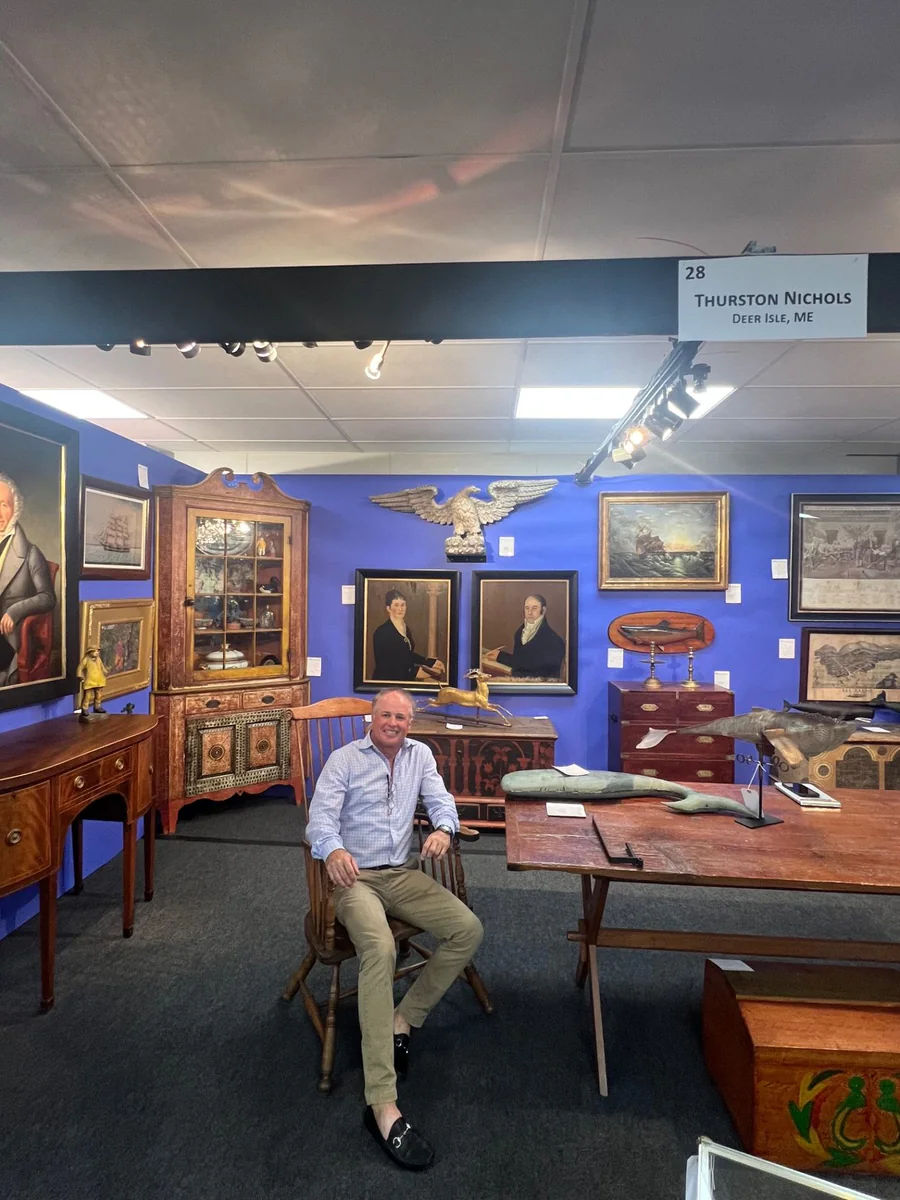
Thurston Nichols works with both experienced collectors and those beginning to define their interests. You can view selected works or reach out directly to discuss a specific object, a developing collection, or a piece you are considering. A personal response is always available.
Careful looking is where collecting begins.